
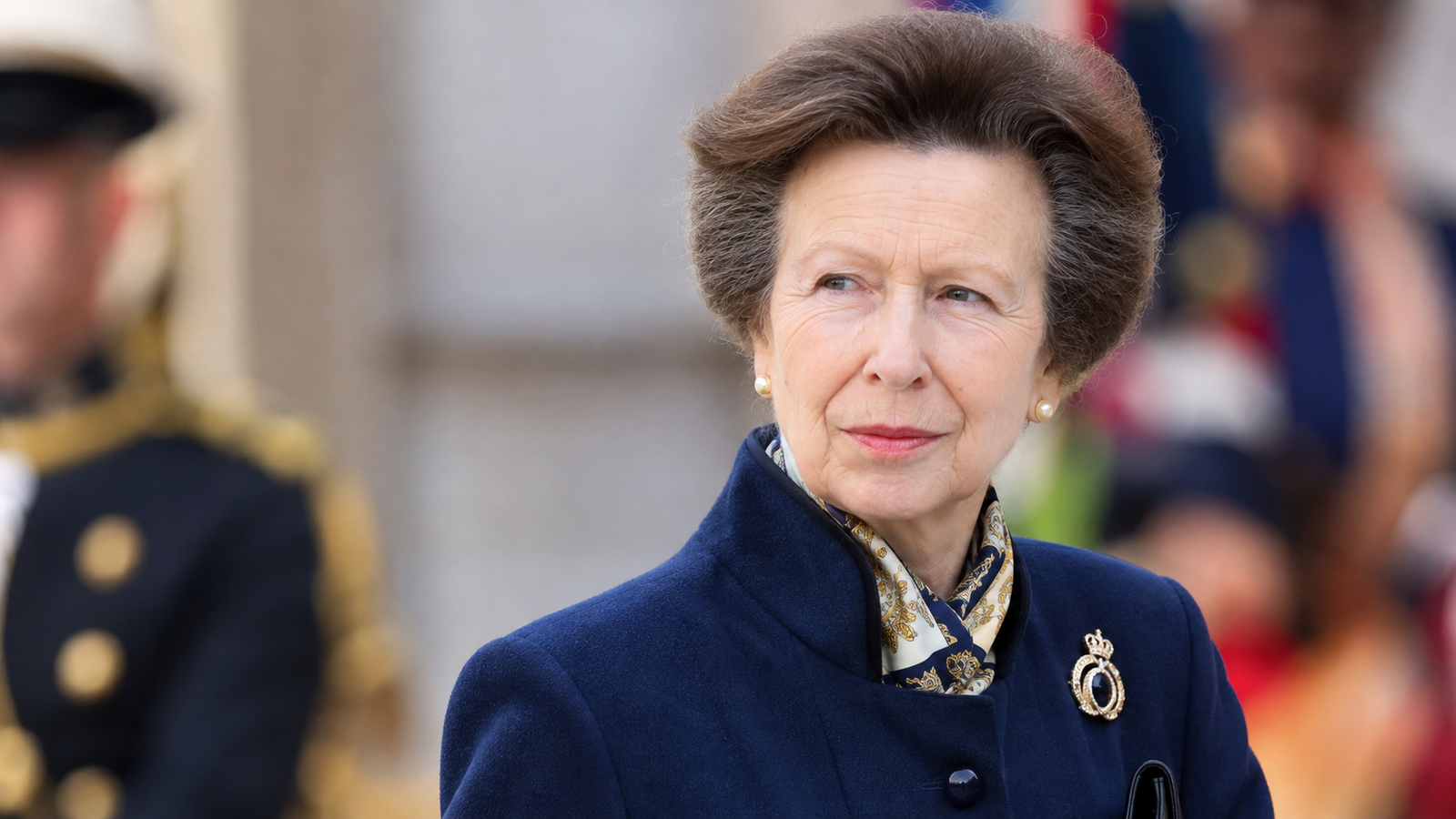
Princess Anne, now formally known as The Princess Royal, has spent more than five decades carrying out public duties for the British Royal Family. Born in 1950, she is the only daughter of Queen Elizabeth II and Prince Philip and the second child of the former monarch.
Unlike some members of the Royal Family who became especially known through their personal lives or media attention, Princess Anne has built much of her public profile around official engagements, charitable work, sport and international representation.
She became The Princess Royal in June 1987, a title traditionally given to the monarch’s eldest daughter and held for life.
Today, Princess Anne remains a working member of the Royal Family. Her duties include attending official events, supporting organisations and charities, representing the United Kingdom overseas and undertaking engagements on behalf of the King.
Who Is Princess Anne?
Princess Anne was born Anne Elizabeth Alice Louise on 15 August 1950 at Clarence House in London. She was the second child of the then Princess Elizabeth and the Duke of Edinburgh, Prince Philip. Her elder brother, Charles, later became King Charles III.
She was educated partly at home before attending Benenden School in Kent from 1963. The Royal Family notes that she was among the first generation of the family to attend a conventional school rather than being educated entirely within a royal household setting.
Princess Anne began undertaking public engagements at the age of 18, with her first engagement taking place in 1969.
Her working life has since developed into one of the longest and most extensive public-service careers among modern members of the Royal Family.
Why Is Princess Anne Called The Princess Royal?
The title Princess Royal is not automatically given to every daughter of a British monarch.
It is a traditional title historically associated with the monarch’s eldest daughter. Princess Anne became the seventh Princess Royal when Queen Elizabeth II gave her the title in June 1987. The title is held for life.
This is why she is often referred to as both Princess Anne and The Princess Royal. “Princess Anne” remains widely used in everyday conversation, while The Princess Royal is her formal royal title.
Princess Anne’s Royal Career
A major part of Princess Anne‘s life has been devoted to official duties.
The Royal Family describes her as a working member of the Royal Family who attends ceremonial occasions, supports organisations and undertakes official visits in the United Kingdom. She also represents Britain overseas and has carried out international tours connected with both official and charitable work.
Her engagements cover a notably broad range of subjects, including:
- Education
- Healthcare
- The armed forces
- Sport
- Agriculture
- Youth organisations
- Emergency services
- International development
- Charitable organisations
- Business and industry
Her diary continues to include a substantial number of public engagements. In September 2026, for example, her official schedule included events connected with the International Sheep Dog Society, the St Leger Stakes, military organisations and charitable foundations.
Princess Anne and the Olympics
Princess Anne has a particularly unusual sporting achievement within the British Royal Family.
She was an accomplished equestrian and represented Great Britain at the 1976 Montreal Olympic Games as part of the British equestrian team. The Royal Family says her experience in the sport later informed her involvement with the International Olympic Committee.
Her connection with horse sport began well before the Olympics.
In 1971, she won the individual European Three-Day Event at Burghley and was subsequently nominated Sportswoman of the Year. She also regularly competed at events such as the Horse of the Year Show.
Her equestrian career therefore became an important part of her identity beyond royal duties.
Princess Anne’s Family
Princess Anne has two children from her first marriage to Captain Mark Phillips:
- Peter Phillips, born in 1977
- Zara Tindall, born in 1981
Her marriage to Mark Phillips took place at Westminster Abbey in November 1973 and was dissolved in 1992. Princess Anne subsequently married Commander Timothy Laurence, now Admiral Sir Tim Laurence, in December 1992.
Princess Anne also has five grandchildren: Savannah, Isla, Mia, Lena and Lucas.
Unlike many royal children, Peter Phillips and Zara Tindall do not use royal titles.
Princess Anne’s Work With Charities and Organisations
Charitable and organisational work forms a significant part of Princess Anne’s public role.
Over the years, she has supported organisations involved in areas ranging from healthcare and emergency services to youth development, transportation and international development.
The official Royal Family biography also highlights her involvement with organisations such as Transaid and Riders for Health, which work on transportation challenges affecting developing countries.
Her patronages and appointments also extend into education. According to the Royal Family’s 75-facts profile, she serves as Chancellor of several universities, including the University of Edinburgh, the University of London and Harper Adams University.
Her public work is therefore not limited to ceremonial appearances. Many engagements involve visiting organisations, meeting staff and volunteers, opening facilities and representing institutions at important events.
Princess Anne’s International Role
Princess Anne regularly travels outside Britain as part of her official responsibilities.
The Royal Family describes her as an ambassador for the United Kingdom who can undertake overseas tours arranged through government channels as well as visits supporting her charitable work.
One recent example came in July 2026, when she visited South Korea and Thailand with Sir Tim Laurence.
During the trip, she attended a commemoration at the United Nations Memorial Cemetery in Busan, met members of the Thai Royal Family and visited Chulalongkorn University in Bangkok. Her university visit highlighted women working in science and technology and UK-supported STEM initiatives.
These visits demonstrate how her role can combine ceremonial responsibilities with specific educational, cultural, charitable and diplomatic themes.
Princess Anne’s Relationship With Equestrian Sport
Horses have remained a major part of Princess Anne’s life.
Her interest in riding developed into competitive success, eventually leading to Olympic participation. Her sporting background also contributed to later responsibilities connected with the Olympic movement.
This connection is unusual because her public career has combined two very different worlds: competitive international sport and the formal responsibilities of a senior member of the Royal Family.
Her equestrian background has also remained visible through her attendance at horse racing and other sporting events.
Princess Anne’s Public Duties Today
Princess Anne continues to undertake official duties under the reign of King Charles III.
Her responsibilities include representing the King at events, visiting organisations, attending ceremonies and supporting institutions of which she is patron or president.
The Court Circular records her continuing programme of engagements. In September 2026, for instance, she was also reported to have appointed Commander Anne Sullivan RN as a Lady in Waiting.
Her recent international work and domestic schedule show that she remains an active member of the working Royal Family rather than a largely ceremonial figure.
How Old Is Princess Anne?
Princess Anne was born on 15 August 1950.
She turned 76 in August 2026.
Her birthday has also provided opportunities for the Royal Family to document different stages of her life. For her 75th birthday in 2025, the official Royal Family website published a collection of facts covering her childhood, education, royal career, family and overseas work.
Princess Anne and Her Place in the Royal Family
Princess Anne’s position within the Royal Family has changed considerably over her lifetime.
She was born when her mother was Princess Elizabeth and grew up as the second child of the future Queen. Following Elizabeth II’s accession in 1952, Anne became a daughter of the reigning monarch.
After Charles became King in 2022, Princess Anne became the King’s sister while continuing her work as a senior working royal.
Her role is shaped less by a single public portfolio and more by the wide range of organisations, causes and official responsibilities she supports.
Frequently Asked Questions About Princess Anne
Who is Princess Anne?
Princess Anne is the only daughter of Queen Elizabeth II and Prince Philip. She was born on 15 August 1950 and has been known formally as The Princess Royal since 1987.
How old is Princess Anne?
Princess Anne was born in 1950 and turned 76 on 15 August 2026.
Is Princess Anne The Princess Royal?
Yes. Queen Elizabeth II gave Anne the title of The Princess Royal in June 1987. It is a title traditionally associated with the monarch’s eldest daughter and is held for life.
Who are Princess Anne’s children?
Princess Anne has two children, Peter Phillips and Zara Tindall.
Who is Princess Anne’s husband?
Princess Anne married Admiral Sir Tim Laurence in 1992. They remain married and have undertaken royal engagements together, including her 2026 overseas visit to South Korea and Thailand.
Did Princess Anne compete in the Olympics?
Yes. Princess Anne represented Great Britain in equestrian competition at the 1976 Montreal Olympic Games.
What does Princess Anne do now?
She remains a working member of the Royal Family, carrying out official engagements, supporting charities and organisations, attending ceremonial events and representing Britain overseas.
Is Princess Anne still involved with horses?
Yes. Equestrian sport has been a major part of her life, and she continues to attend sporting and equestrian-related events as part of her public schedule.
Final Thoughts
Princess Anne’s life combines royal service, competitive sport, charitable work and international representation. Born in 1950 as the second child of Queen Elizabeth II, she developed a public career that has continued across several decades and two reigns.
Her achievements in equestrian sport, including competing at the 1976 Olympics, remain a distinctive part of her biography. Meanwhile, her continuing programme of domestic and overseas engagements demonstrates the breadth of her responsibilities as The Princess Royal.
For anyone researching Princess Anne, her story is therefore about much more than royal family connections. It is also the story of a long-serving public figure whose career has included sport, charity, education, ceremonial duties and international work.