
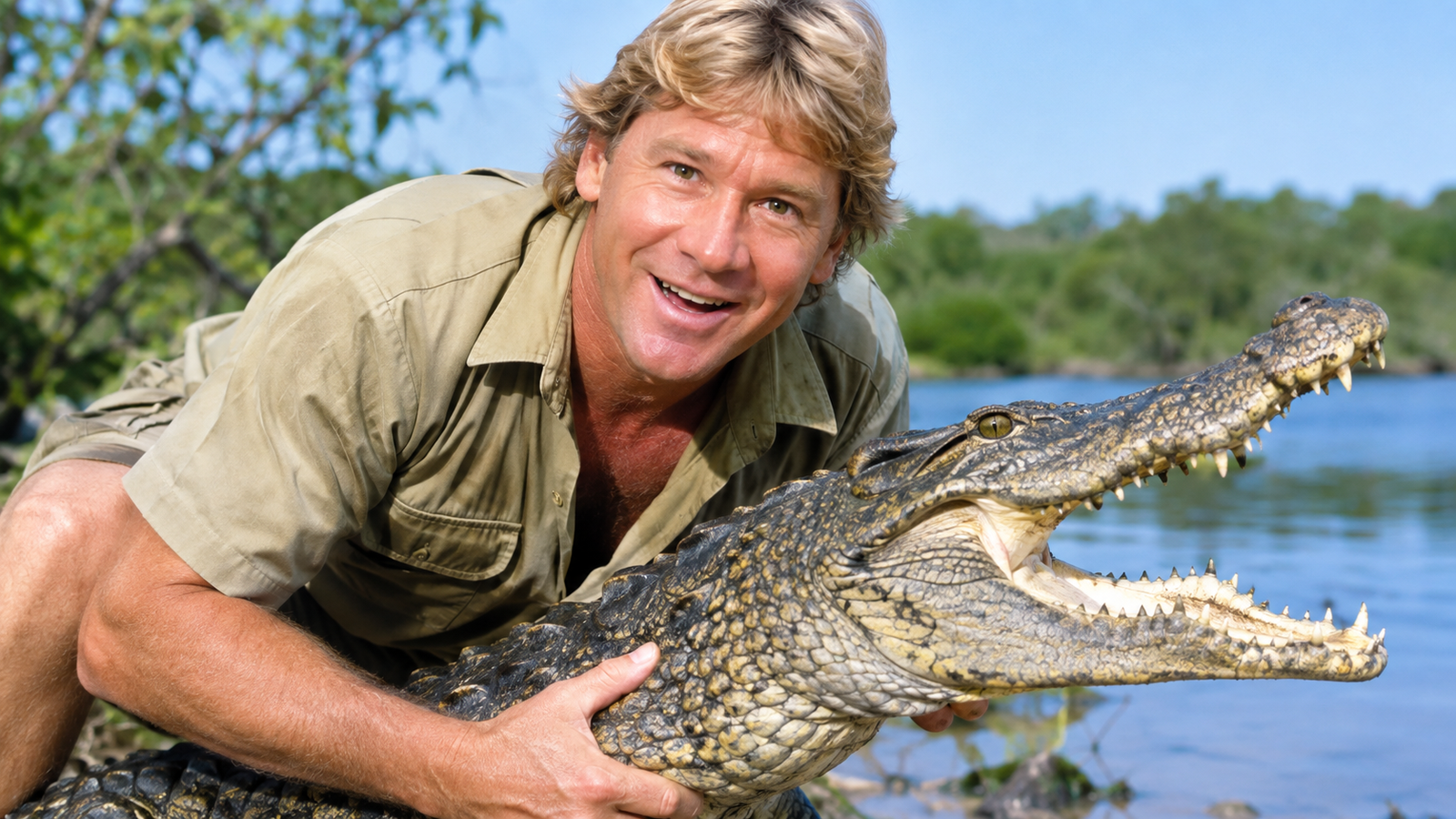
Steve Irwin, the Australian wildlife expert and television personality known around the world as The Crocodile Hunter, died on September 4, 2006, at the age of 44.
His death shocked millions of people because Irwin had built his career around working closely with some of the world’s most dangerous animals. Yet his fatal accident involved an animal that is usually far less associated with serious attacks: a stingray.
How did Steve Irwin die? He was fatally injured by a stingray while filming a documentary in the waters off Queensland. The stingray’s tail barb pierced his chest and struck his heart. Emergency efforts to save him were unsuccessful.
His death was sudden, unusual and deeply tragic, but it is also important to understand what actually happened rather than relying on myths or sensationalised accounts.
Who Was Steve Irwin?
Steve Irwin was an Australian wildlife conservationist, television presenter and zoo owner who became internationally famous through The Crocodile Hunter.
Born on February 22, 1962, he grew up around wildlife after his parents established what became the Australia Zoo in Queensland. He developed an early interest in reptiles and eventually devoted his career to wildlife education and conservation.
Together with his wife, Terri Irwin, Steve helped transform the family wildlife park into Australia Zoo. His energetic television style made him one of the most recognisable wildlife personalities in the world.
His work went beyond television. The Irwin family invested in wildlife rescue, conservation and education, with Australia Zoo continuing those efforts after his death.
How Did Steve Irwin Die?
Steve Irwin died after a stingray barb pierced his chest and struck his heart while he was snorkelling in Queensland.
The accident happened on September 4, 2006, while Irwin was working on a documentary near Batt Reef, off Port Douglas in far north Queensland. He was accompanied by cameraman Justin Lyons, who was filming underwater. Contemporary reports said Irwin was swimming above the stingray when it suddenly lashed out with its tail.
The injury was catastrophic.
According to reports from the time, Irwin briefly pulled the barb from his chest before losing consciousness. The crew immediately stopped filming and attempted to get him medical assistance. Paramedics were brought in, but they were unable to save him.
Where Did Steve Irwin Die?
Irwin died in the waters near Batt Reef, off the coast of Port Douglas in Queensland, Australia.
He had been filming underwater footage for a documentary project when the accident occurred. Australia Zoo confirms that Irwin died on September 4, 2006, in an accident while snorkelling on the Great Barrier Reef.
The location was part of the Great Barrier Reef environment that Irwin knew well through his wildlife and conservation work.
Why Did the Stingray Attack Him?
It is easy to describe the incident as a deliberate “attack,” but that can give the wrong impression.
Contemporary police reports indicated that there was no evidence Irwin had threatened or deliberately provoked the stingray. He was observing the animal when it reacted.
Stingrays generally do not seek out humans as prey. Their tail spines are primarily a defensive mechanism. If a stingray feels threatened, it can rapidly swing its tail, allowing the barb to cause a serious injury.
In Irwin’s case, the animal was extremely close to him, and the barb struck an exceptionally vulnerable area.
Marine experts interviewed after the incident described a fatal stingray injury as extremely rare.
What Happened During Steve Irwin’s Final Moments?
The sequence of events became known because a camera crew was filming the documentary.
Reports said Irwin and cameraman Justin Lyons were snorkelling over a shallow reef when Irwin moved over a stingray. The animal suddenly struck upward with its tail, and the barb penetrated Irwin’s chest.
The cameraman initially did not understand how serious the injury was. Once he realised what had happened, the filming stopped and the crew attempted to help Irwin.
Emergency responders were called, but the injury was fatal.
Because the footage was extremely distressing, it was never publicly released. Queensland authorities later confirmed that the original recording was given to Irwin’s widow, Terri Irwin, and copies were destroyed.
Was Steve Irwin Filming a TV Show When He Died?
Yes. Irwin was working on a documentary project when the accident happened.
According to contemporary reporting, he was filming material connected with a television project for his daughter Bindi. The underwater footage captured the accident itself.
This detail has sometimes led to confusion because people assume he was filming an episode of The Crocodile Hunter. His death occurred while he was working on a separate documentary project rather than during a routine Crocodile Hunter episode.
Was Steve Irwin’s Death Caused by a Stingray’s Venom?
The key injury was the penetration of the chest and damage to the heart, rather than simply being stung somewhere on the body.
A stingray’s tail contains a sharp, barbed spine. Marine experts explained at the time that the spine can cause severe tissue damage as it enters and is withdrawn. It can also introduce venom.
However, in Irwin’s case, the location of the wound was the critical factor. The barb struck his heart, producing a rapidly fatal injury.
Did Steve Irwin Know He Was in Danger?
Irwin spent his career working with potentially dangerous wildlife, but his family and colleagues did not regard his death as the predictable result of reckless behaviour.
Terri Irwin later described the incident as a freak accident rather than something her husband had expected to happen while working with wildlife.
That distinction matters. Irwin had extensive experience around animals, including crocodiles, snakes and other reptiles. His knowledge helped him understand animal behaviour, but expertise could not eliminate the possibility of an unexpected accident.
Why Was Steve Irwin’s Death So Shocking?
Steve Irwin’s public image made his death particularly difficult for people to comprehend.
Millions of viewers had watched him approach crocodiles, handle snakes and interact with wildlife that most people would avoid. He seemed almost inseparable from the animals he studied.
Yet his fatal accident involved a stingray, an animal that many people do not normally associate with fatal encounters.
His death also occurred while he was doing work connected to the subjects he cared about most: wildlife and conservation.
Australia Zoo says Irwin’s family has continued his conservation mission, with his legacy carried forward through wildlife protection, education and rescue work.
What Happened to the Footage of His Death?
The footage was recorded by the documentary crew, but it was never released publicly.
After the investigation, the recording was ultimately given to Terri Irwin. Authorities also destroyed copies so that the material would not be publicly broadcast.
This is why videos claiming to show Steve Irwin’s actual death should be treated with extreme caution. Authentic footage was not released for public viewing.
Steve Irwin’s Legacy After His Death
Irwin’s influence did not end with his death.
Australia Zoo continued operating under the Irwin family’s leadership, and his children, Bindi and Robert Irwin, have remained involved in wildlife conservation and public education.
The Steve Irwin Wildlife Reserve in Queensland was also established as a tribute to his conservation work. The reserve protects a large area of important habitat and reflects the conservation goals associated with Irwin’s career.
Perhaps the most lasting part of his legacy is the way he encouraged audiences to see wildlife as something worth protecting rather than simply something to fear.
Final Thoughts
How did Steve Irwin die? Steve Irwin died on September 4, 2006, after a stingray’s barb pierced his chest and struck his heart while he was snorkelling near Batt Reef in Queensland. He was 44 years old.
The incident was a rare and unexpected accident. Authorities found no evidence that Irwin had deliberately provoked the stingray, and the footage of his death was never released publicly.
Although his life ended suddenly, the conservation work he built with his family continues through Australia Zoo and other wildlife initiatives.