

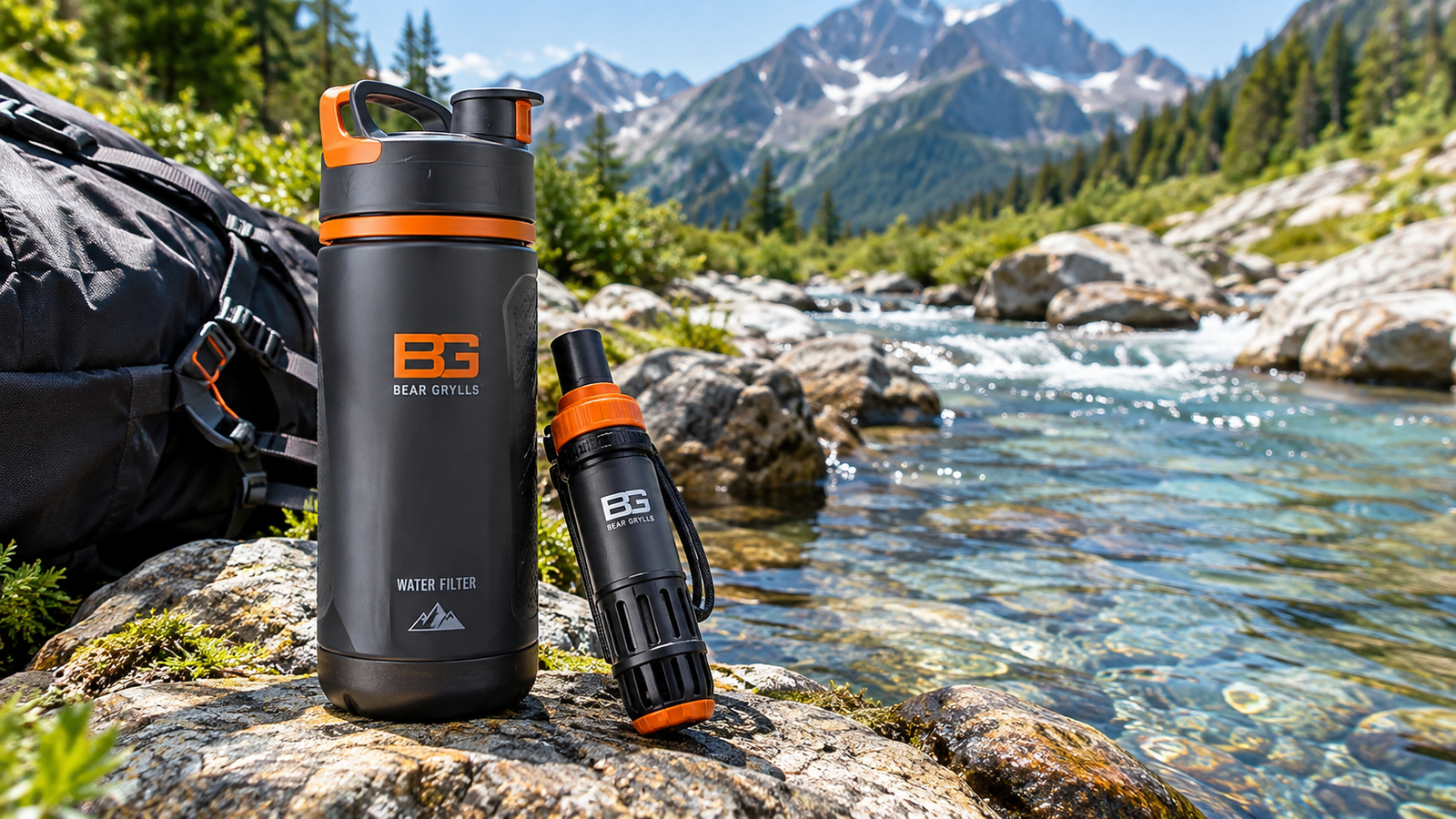
Finding safe drinking water is one of the biggest concerns when hiking, camping, travelling or preparing for an outdoor emergency. A portable filter can turn a questionable water source into something much more practical to drink—but not every filter works in the same way.
If you’re searching for a bear grylls water filter, the first thing to understand is that Bear Grylls has been associated with several outdoor and hydration products over the years. His current official site also lists Water2, a clean-hydration venture.
The important question, however, isn’t simply whether a product carries the Bear Grylls name. It’s what the filtration system is actually designed to remove, how you use it, and where its limits are.
What Is a Bear Grylls Water Filter?
A Bear Grylls water filter generally refers to a portable outdoor water-filtration product associated with the survival expert and adventurer.
The basic idea is straightforward: instead of carrying all the water you’ll need for a trip, you can collect water from an available freshwater source and process it using a suitable filtration or purification system.
That distinction matters because filtering and purifying aren’t always the same thing.
A conventional filter may physically trap particles and certain microorganisms. A purifier is designed to provide broader protection against specified pathogens. The exact performance depends on the cartridge and product design, so you should always check the instructions for the particular model rather than assuming every outdoor filter provides identical protection.
Why Use a Portable Water Filter?
Carrying enough water for a long hike can quickly become impractical. A portable filtration system gives travellers another option: carry a smaller amount initially and replenish from suitable freshwater sources along the route.
A filter can also improve the taste and appearance of water by reducing sediment and other unwanted substances, depending on the technology used.
For campers, hikers and emergency-preparedness kits, the biggest benefit is flexibility. You aren’t relying entirely on bottled water or finding a treated tap every time you need to refill.
But a filter should be viewed as one part of a water-safety strategy—not a magic solution for every contaminated water source.
How Does a Portable Water Filter Work?
The exact mechanism varies between products.
Some systems use physical filtration to capture particles and microorganisms. Others combine several forms of treatment to address a broader range of contaminants.
For comparison, modern press-style purification bottles such as the GRAYL UltraPress use a cartridge that treats water as it is pressed through the system. The manufacturer describes the process as separating the bottle, filling the outer container, venting the cap and pressing the inner section through the water.
This illustrates an important point for anyone shopping for an outdoor filter: the cartridge is the heart of the system. Bottle design, capacity and convenience matter, but the treatment technology determines what the device can actually do.
What Can a Water Filter Remove?
There isn’t one universal answer.
Depending on the filter technology, an outdoor water filter may reduce or remove:
- Sediment and suspended particles
- Dirt and silt
- Certain bacteria
- Protozoa
- Some chemicals or heavy metals
- Unpleasant tastes and odours
- Other contaminants specifically listed by the manufacturer
Some purification systems are also designed to address viruses. For example, GRAYL’s current UltraPress documentation states that its cartridge is designed to remove viruses, bacteria and protozoa, along with various other contaminants.
That doesn’t mean every Bear Grylls-branded or Bear Grylls-associated filter has the same capabilities.
Before relying on a product in the wilderness, look for its specific contaminant claims, testing information, cartridge specifications and instructions.
Filter vs. Purifier: What’s the Difference?
This is one of the most common sources of confusion.
A filter generally uses a physical barrier or filtration media to reduce particular contaminants. A purifier is a broader term used for systems that meet defined performance standards for treating specified microbiological hazards.
The difference becomes especially important when you’re collecting water from a stream, lake or other untreated source.
For example, a system that removes bacteria and protozoa shouldn’t automatically be assumed to remove viruses. Likewise, a filter that improves muddy-looking water isn’t necessarily designed to deal with dissolved industrial chemicals.
Read the manufacturer’s specifications rather than relying on the word “filter” alone.
How to Use a Portable Water Filter Safely
The correct procedure depends on the product, but several principles apply to most outdoor filtration systems.
1. Choose the cleanest available source
Don’t automatically collect water from the first puddle you see.
Clear, flowing freshwater is generally preferable to stagnant water containing large amounts of mud, organic debris or algae. Some manufacturer guidance specifically recommends selecting the least silty water available because heavy sediment can reduce cartridge performance or shorten its useful life.
2. Follow the cartridge instructions
Install the cartridge exactly as instructed.
A badly fitted cartridge can create a pathway for untreated water to bypass the intended treatment system. Modern purifier-bottle instructions emphasise correct cartridge installation to prevent cross-contamination.
3. Keep clean and dirty water separate
This sounds obvious, but it’s an easy mistake outdoors.
If the untreated side of a bottle touches the clean drinking side, you can contaminate water that has already been treated.
Use separate areas for collecting untreated water and drinking or storing treated water whenever the product design requires it.
4. Don’t exceed the cartridge’s rated life
Filters are consumable components.
As a cartridge becomes clogged, flow can slow considerably. Sediment-heavy water can shorten its useful life, so the manufacturer’s stated capacity should be treated as a limit rather than a rough suggestion.
For example, the GRAYL UltraPress documentation lists a cartridge life of approximately 300 presses or 150 litres under its specified conditions.
That figure should not be transferred to a different filter simply because both products look similar.
5. Store the filter correctly
Moisture and poor storage can create problems between trips.
Follow the manufacturer’s drying and storage instructions. Some systems require the cartridge to be thoroughly dried before longer-term storage, while other products may have different requirements.
Don’t put soap or cleaning chemicals through a cartridge unless the manufacturer specifically says that you can.
When a Water Filter May Not Be Enough
This is perhaps the most important limitation to understand.
A portable filter isn’t a universal treatment for every type of contaminated water.
You should be particularly cautious around water affected by:
- Industrial pollution
- Fuel or oil
- Chemical spills
- Heavy concentrations of toxic metals
- Sewage contamination beyond the filter’s stated capabilities
- Harmful algal blooms
- Saltwater or brackish water
For example, GRAYL’s current guidance specifically warns that its UltraPress is not designed for situations such as industrial disasters, very high lead levels, mercury contamination, nuclear disasters or toxic blue-green algae.
The lesson is broader than one particular product: a filter is only as capable as the treatment technology inside it.
If you suspect chemical contamination, finding a different water source is often safer than assuming a portable filter will make the water drinkable.
Common Mistakes to Avoid
Assuming clear water is safe
Clear water can still contain microorganisms. Appearance alone isn’t a reliable safety test.
Assuming every filter removes viruses
Different technologies provide different levels of protection. Check the actual specifications.
Using saltwater
Many portable freshwater filters are not designed for seawater or brackish water. Don’t assume filtration can remove dissolved salt.
Ignoring sediment
Very muddy water can clog filtration media quickly. If possible, allow heavy sediment to settle and collect clearer water from above it.
Forgetting cartridge replacement
A filter can continue to look perfectly normal even when its cartridge has reached its recommended service limit.
Cross-contaminating clean water
Touching treated water with an untreated collection container, bottle opening or dirty hands can undermine the treatment process.
Is a Bear Grylls Water Filter Good for Hiking?
It can be useful if the particular product matches the conditions you’re likely to encounter.
For a normal hiking trip, consider:
- Expected water sources
- Number of people using it
- Daily water requirements
- Filter capacity
- Cartridge replacement cost
- Weight
- Flow rate
- Protection against the contaminants you are actually concerned about
A lightweight filter may make sense for a solo day hike. A larger purification system may be more practical for a multi-day trip or group.
Don’t choose purely because a famous survival expert’s name appears on the packaging. Choose based on independently verifiable specifications and your intended environment.
What Should You Look for When Buying One?
If you’re comparing outdoor water filters, focus on the following features.
Filtration performance: Find out exactly which bacteria, protozoa, viruses, particles or chemicals the system is designed to address.
Capacity: A cartridge rated for a limited number of litres may be fine for occasional hiking but expensive for frequent use.
Flow rate: A filter that takes a long time to produce drinking water can become frustrating when you’re tired or travelling with several people.
Weight: Every extra component matters when you’re carrying a backpack over long distances.
Ease of maintenance: Replacement cartridges should be readily available, and cleaning should be practical in the field.
Water-source compatibility: Confirm whether the system is intended for freshwater only and whether there are restrictions on particularly muddy, tannin-rich or contaminated sources.
Bear Grylls Water Filter: The Bottom Line
A bear grylls water filter can be an appealing option for outdoor enthusiasts because the Bear Grylls name is strongly associated with survival and adventure. But the name alone shouldn’t determine whether a particular water-treatment product is right for you.
Look beyond the branding. Check the exact model, cartridge technology, contaminant claims, capacity, maintenance requirements and limitations.
Most importantly, understand the difference between making water look cleaner and making it microbiologically safe. The right system can be extremely useful outdoors, but no portable filter should be treated as protection against every possible contaminant.
For serious trips, carry a backup water-treatment method and plan your water sources before setting out.
Frequently Asked Questions
1. What is a Bear Grylls water filter?
It generally refers to a portable water-filtration or purification product associated with Bear Grylls and outdoor survival use. The exact capabilities depend on the specific product and cartridge.
2. Does a Bear Grylls water filter remove bacteria?
That depends on the particular model. Check its technical specifications rather than assuming that all Bear Grylls-associated products provide the same level of microbiological protection.
3. Does a water filter remove viruses?
Some purification systems are specifically designed to remove viruses, but many conventional filters are not. Always verify the manufacturer’s stated performance.
4. Can I use a portable water filter with seawater?
Usually not. Many outdoor freshwater filtration systems are not designed to desalinate seawater or treat brackish water.
5. How often should a water-filter cartridge be replaced?
The replacement interval varies by product, cartridge and water quality. Heavy sediment can shorten cartridge life. Follow the specific manufacturer’s capacity and replacement guidance.
6. Can I filter water from a lake?
A suitable outdoor purifier may be designed for freshwater from lakes, but you still need to consider sediment, algae, chemical contamination and the device’s stated limitations.
7. Is filtered water always safe to drink?
No. Safety depends on the source, the contaminants present and the treatment system’s capabilities. A filter cannot be assumed to remove substances it was not designed to treat.
Final Thoughts
The best portable water filter is not necessarily the one with the biggest name attached to it. It’s the one whose technology matches the water sources and risks you expect to encounter.
If you’re considering a Bear Grylls water filter for hiking or emergency use, check the exact model and its cartridge specifications before buying. A few minutes spent understanding those details can make a much bigger difference than choosing based on branding alone.